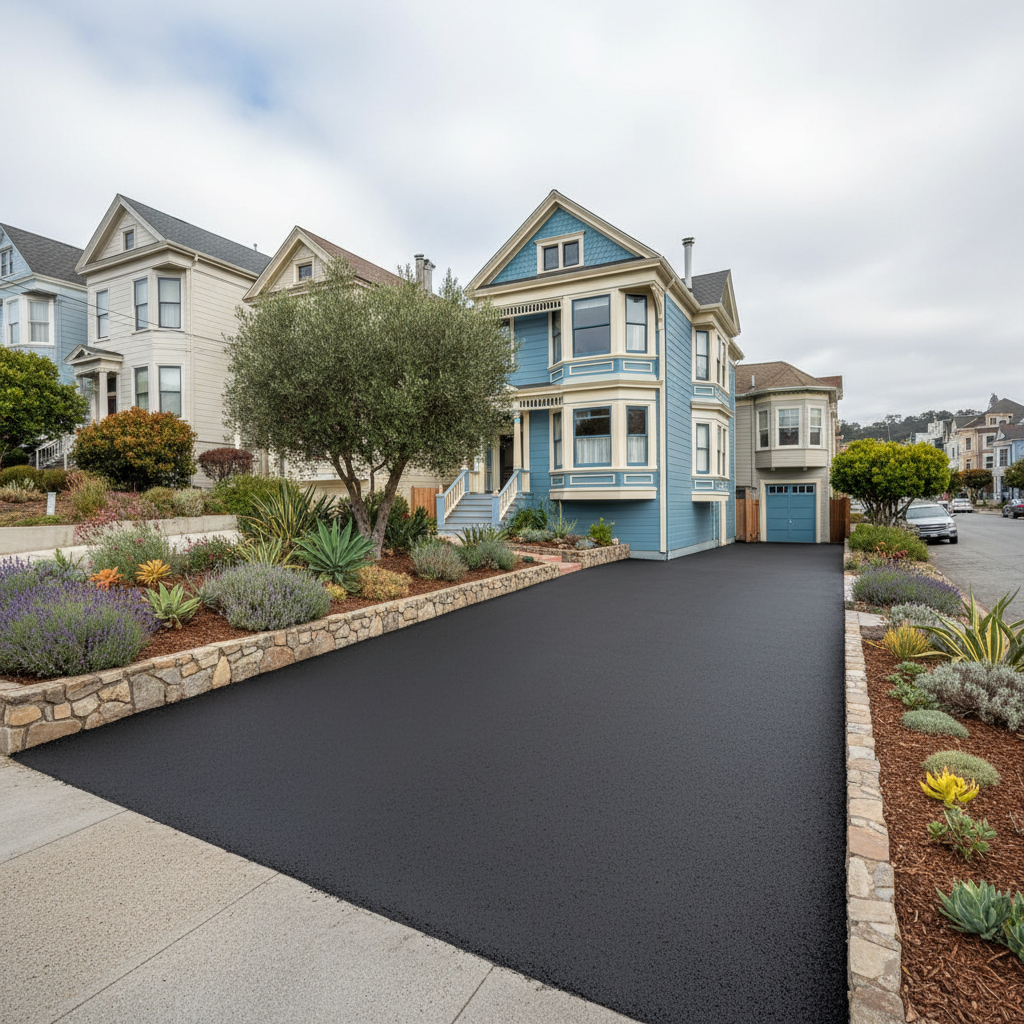
Residential asphalt in San Francisco isn't like paving a driveway in, say, Arizona. We've got our own unique challenges here, and if you're looking to put in a new driveway, repair an old one, or just understand what's going on under your tires, you really need to consider what makes our city special. It's not just about laying down some blacktop, you know; it's about doing it right for *our* conditions.
The SF Weather & Your Driveway
First off, let's talk weather. Everyone thinks of San Francisco and pictures fog, right? You're not wrong. That constant dampness, especially in neighborhoods closer to the ocean like the Outer Sunset or Richmond, means your asphalt is always dealing with moisture. Water is asphalt's enemy. It seeps into cracks, expands when it gets cold (even if it doesn't freeze solid here, the temperature swings are enough), and eventually breaks down the binder. You end up with potholes, alligator cracking, and a generally worn-out look a lot faster than you would in a drier climate.
Then there's the sun. When it does come out, especially in the summer or in sunnier spots like the Mission or Potrero Hill, that UV radiation bakes the surface. It dries out the asphalt, making it brittle and more prone to cracking. So, we're battling both ends of the spectrum here: constant damp and occasional intense sun. This is why proper drainage and a good sealcoat are absolutely critical for any residential asphalt project in our city.
Steep Hills & Tricky Access: SF's Unique Terrain
You can't talk about San Francisco without talking about hills. We've got 'em everywhere. Nob Hill, Russian Hill, Bernal Heights – you name it. Paving a flat driveway is one thing; paving a steep one is a whole different ballgame. You need to consider proper grading for water runoff so it doesn't pool at the bottom or erode the edges. You also need to think about vehicle traction, especially for driveways that are frequently used. The mix of asphalt needs to be right, and the compaction has to be spot-on to prevent slippage and ensure durability.
Beyond the hills, there's the access issue. Many residential properties here, especially in older neighborhoods like North Beach or the Castro, have tight driveways, narrow streets, and limited space for equipment. You can't just roll in with a giant paver and expect to get the job done. It often requires smaller equipment, more manual labor, and a lot more precision. This isn't a problem for us at Alpha Asphalt San Francisco; it's just how we do business. We're used to navigating these constraints.
Common Residential Asphalt Projects We See Around Here
What kind of residential asphalt work do we typically do in San Francisco? It's a mix, but here are the most common ones:
- Driveway Resurfacing: This is a big one. Many older driveways are showing their age – cracks, potholes, fading. Instead of a full tear-out, a good resurface can give you a fresh, smooth look and extend your driveway's life significantly.
- New Driveway Installations: Whether it's a new build or replacing an old, failing concrete or gravel driveway, we put in new asphalt surfaces that are built to last.
- Asphalt Patching & Repair: For smaller areas of damage, patching is a cost-effective way to prevent bigger problems down the line. We see a lot of this from tree roots or localized water damage, for example.
- Drainage Solutions: Sometimes the asphalt isn't the only problem. We often work on improving drainage around driveways to prevent future water damage, which is crucial with our climate.
- Sealcoating: This is your first line of defense against the elements. A good sealcoat protects your asphalt from UV rays, water penetration, and even oil spills. It's preventative maintenance that saves you money in the long run.
Why Local Expertise Isn't Just a Buzzword
Look, you can hire any paving company, but if they don't understand San Francisco, you're probably going to end up with problems sooner rather than later. We know the soil conditions here – some areas are sandier, some are clay, and some are just plain old fill. We know the microclimates. We know the city's permitting processes (which can be a headache if you're not familiar with them). We know what materials perform best under our specific conditions.
When you're investing in your home, you want someone who's seen it all in *your* city. Someone who knows that a driveway in Pacific Heights has different challenges than one in the Excelsior. We've been doing this for years, right here in San Francisco. We've seen what works and what doesn't. That experience isn't something you can just pick up from a textbook; it comes from getting your hands dirty on countless projects across this unique city.
Don't just get asphalt; get San Francisco asphalt. It makes a difference.