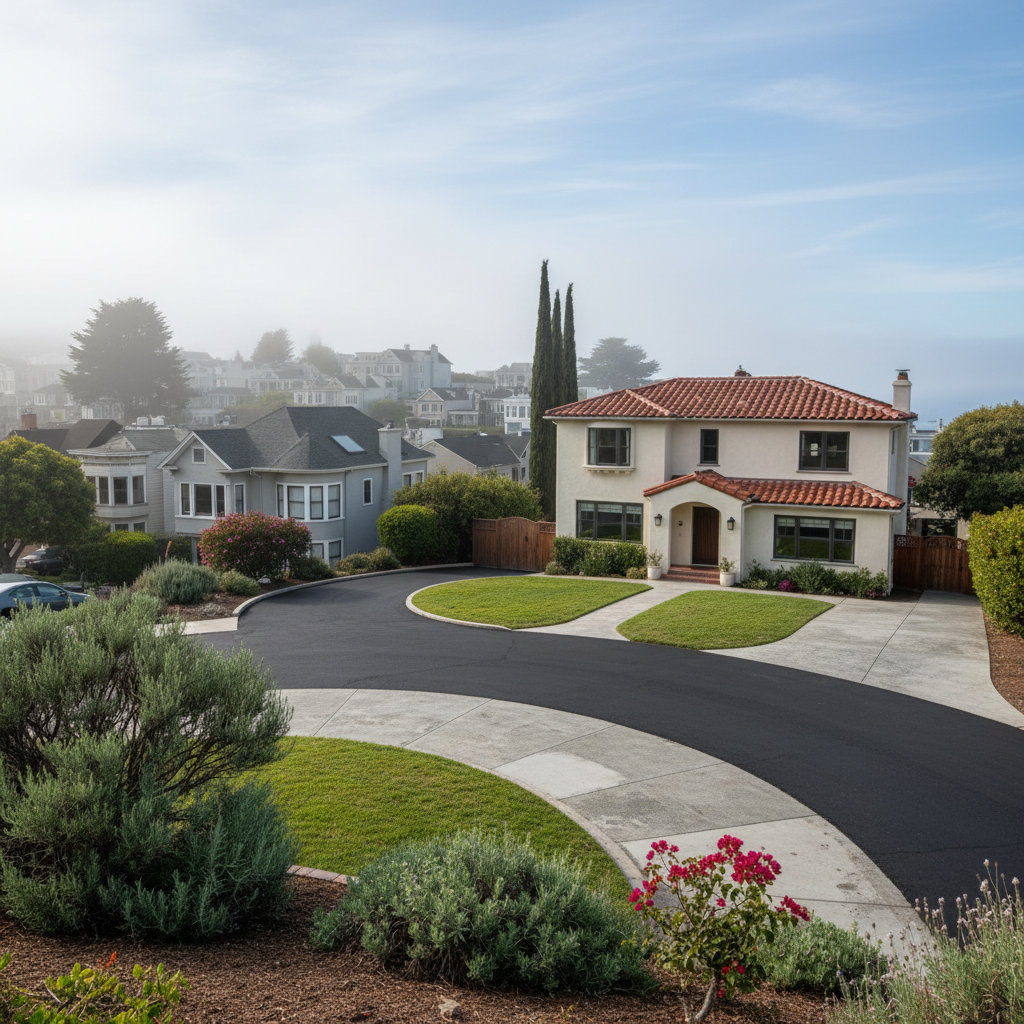
Seen cracks in your driveway lately? Maybe you're thinking about getting that pothole fixed before it turns into a crater. Good for you — being proactive is smart. But here in San Francisco, you can't just call up any asphalt crew whenever you feel like it and expect a top-notch job. Our weather, as lovely as it often is, throws some real curveballs when it comes to asphalt repair.
Why SF Weather Really Matters for Your Asphalt
You know how our microclimates work, right? One minute it's thick fog in the Sunset, the next it's bright and warm downtown. This isn't just about whether you need a jacket; it's absolutely critical for asphalt. Asphalt needs specific conditions to cure correctly and, you know, actually last. We're talking about the temperature, how much moisture is in the air, and even that famous fog.
Cold, wet weather is just plain bad news for fresh asphalt. If it's too chilly, the asphalt mix won't compact properly, and it won't stick together as well. Too much water, and that moisture can get trapped underneath, which often leads to cracking or crumbling way too soon. And let's not forget our iconic San Francisco fog. It's not a downpour, sure, but that constant dampness can really slow down the curing process and mess with how strong new repairs turn out.
Think about it: you wouldn't paint your house in the middle of a rainstorm, would you? It's the same idea here. We want your asphalt to hold up for years, and that means working with Mother Nature, not fighting her every step of the way.
When's the Best Time to Schedule Asphalt Repair in SF?
Okay, so if cold and wet are bad, what's good? Generally, the sweet spot for asphalt repair in San Francisco falls during our drier, warmer months. That usually means from late spring right through early fall. We're looking for steady temperatures above 50°F — ideally closer to 70°F or 80°F — and clear skies.
This is when the asphalt mix stays flexible longer, which lets us compact it better and get a stronger bond. It also gives the asphalt plenty of time to cure fully before those inevitable winter rains arrive. If you wait until, say, November or December, you're really just gambling. We might get a dry spell, sure, but ground temperatures are lower, and the chances of rain are much higher. It's simply not worth the risk if you want a repair that truly lasts.
So, if you're noticing problems now, don't put it off until next winter. Get on our schedule for spring or summer. That's when you'll get the most durable repair for your money.
Weather Conditions That Affect the Work
When we're out on a job site, we're always checking the forecast. Here's what we pay close attention to:
- Temperature: Like I mentioned, above 50°F is the absolute minimum, but warmer is definitely better. It helps the asphalt flow and compact correctly.
- Rain: Any real chance of rain means we're rescheduling. You just can't lay asphalt on a wet surface, and it certainly can't get rained on right after. It simply won't bond.
- Humidity/Fog: High humidity and thick fog can slow down the cooling process, which is important for the asphalt to harden properly. It's usually not a deal-breaker like rain, but it's something we factor in.
- Wind: Strong winds can cool the asphalt too quickly, making it harder to work with and get it properly compacted.
We really have to be flexible. Sometimes we'll have a job all set, and then the weather just turns. It's annoying for everyone involved, but it's always better to postpone than to do a crummy job that won't last. We're not just trying to finish the work; we're trying to do it right, so you don't have to call us back next year for the exact same issue.
Protecting Your Asphalt Investment Year-Round
Once your asphalt is repaired, you'll want to keep it looking good and performing well. Here's what you can do:
- Keep it Clean: Sweep up debris, leaves, and dirt regularly. Organic stuff can hold moisture, and that breaks down the asphalt surface over time.
- Address Spills Immediately: Oil, gas, and other chemicals can soften and degrade asphalt. Clean them up as soon as you spot them.
- Watch for Water: Make sure your drainage is working well. Puddles that sit for long periods are a huge cause of asphalt deterioration. If you've got standing water, that's a problem we really need to look at.
- Sealcoating: Think of this as sunscreen for your asphalt. A good sealcoat every few years protects the surface from UV rays, water getting in, and oxidation. It keeps it looking fresh and extends its life. Alpha Asphalt San Francisco can help you figure out the right schedule for this.
- Small Cracks: Don't let small cracks turn into massive potholes. If you see new cracks forming, get them filled quickly. It's a much cheaper and easier fix than waiting until your driveway looks like the moon's surface.
Taking care of your asphalt isn't just about how it looks; it's about protecting your property value and avoiding more expensive repairs later on. A little attention throughout the year goes a long way, especially with our unique San Francisco climate. Get ahead of those repairs and keep your surfaces solid.